OUR Immigration cases
A collection of client stories and case outcomes

Outcomes depend on individual facts and law.
A Note on How We Practice Immigration Law
Every case outcome shown above reflects a specific result, but none of them tells the whole story on its own.
From our end, the practice of immigration law is rarely limited to completing forms or tracking deadlines. Much of the work happens before anything is filed — reading notices carefully, questioning assumptions, reconstructing facts that may be years or decades old, and deciding when action is appropriate and when restraint serves the client better.
We routinely work with individuals and families who arrive confused, discouraged, or having lost trust after prior experiences. In those situations, our role extends beyond legal analysis. We take the time to explain the process in detail, answer questions repeatedly if needed, and remain accessible throughout periods of uncertainty. Immigration cases often move slowly, and clarity and consistency matter just as much as legal strategy.
Not every problem has a clean or perfect solution. At times, the law presents clients with difficult choices rather than ideal ones. Our responsibility is to explain those choices honestly, outline the risks and consequences, and help clients select the path that causes the least long-term harm — even when that means delaying action or acknowledging the limits of what the system allows.
These outcomes are the result of careful judgment, patience, and sustained involvement. They reflect how we approach our work every day: methodically, transparently, and with respect for the lives that are affected by each decision.
MARRIAGE-BASED ADJUSTMENT

Marriage-Based Green Card Approved While U-1 Visa Was Pending
10-Year Permanent Resident Card Granted (No Conditional Green Card). 2012.
Our client first entered the United States from Brazil on a visitor’s visa and, unfortunately, overstayed. Later, under very difficult circumstances, she became the victim of a serious crime and filed for U-1 nonimmigrant status. As is often the case with U visas, the process stretched on for years, leaving her on a waiting list with deferred action but no clear timeline for permanent residence.
During this prolonged period of uncertainty, life moved forward. She met her future husband in Irvine, California, and the two eventually married. They reached out to my office to explore whether marriage-based adjustment of status was possible while her U-1 visa remained pending.
Although in-person meetings were not required, the couple chose to drive from Southern California to Las Vegas twice to meet with me personally. From the outset, my role was to provide clarity, strategy, and reassurance—especially because the client was understandably concerned that changing course from a U-visa path to a marriage-based green card might confuse USCIS or raise red flags. In my experience, that concern is common—but misplaced.
Because the client already had deferred action through the U-visa process, she was not required to rush. We made a deliberate decision to wait several additional months before filing the adjustment application so that the case would be adjudicated closer to the couple’s two-year marriage anniversary. This strategic timing mattered.
The adjustment interview itself was thorough. The officer at the USCIS Field Office in Chatsworth, CA reviewed a very large file and asked detailed questions, including about the still-pending U-1 petition. At the conclusion of the interview, the officer advised that additional time would be needed to review the record carefully.
Approximately two months later, the approval arrived—followed shortly by a 10-year permanent resident card.
This outcome represented a double win for the client:
She obtained lawful permanent residence years sooner than she would have through the U-visa process.
By waiting to file strategically, we bypassed conditional residence altogether, eliminating the need for a future I-751 filing and a second round of legal fees and uncertainty.
Most importantly, the client gained peace of mind. What she initially feared would complicate her immigration history instead became a clean, well-reasoned transition to permanent residence. This case is a strong example of how careful timing, experience, and strategy—not speed—can make a meaningful difference for families navigating complex immigration options.
Recovery After a Prior Case Was Never Filed
Result: Marriage-Based Adjustment of Status Properly Filed and Case Back on Track. January 2026.
This couple came to my office seeking what they believed would be a routine second opinion. For nearly three years, they had been waiting for a decision on a marriage-based adjustment of status that they understood had already been filed by another attorney. Processing delays are common, and at first, they simply wanted reassurance.
What the consultation revealed was far more serious.
As we reviewed the history of the case, it became clear that nothing had ever been filed. There were no USCIS receipt notices. No biometrics appointment had ever been scheduled. No delivery confirmations, tracking numbers, or copies of filings existed. Every objective indicator pointed to the same conclusion: the application had never been submitted.
The realization was devastating. The immigrant spouse had unknowingly been out of status for nearly three years, through no fault of her own. The couple was shocked, confused, and understandably distrusting—especially of attorneys. What they believed was a simple consultation turned into the discovery of a profound breakdown in representation.
At that point, the focus shifted from what should have happened to what could still be done.
We developed a clear, lawful plan to move forward: to carefully assemble and file a complete marriage-based adjustment of status package, supported by thorough documentation and a clean, transparent record. Just as importantly, we addressed the emotional side of the case. Rebuilding trust took time.
This was an older couple who had experienced a lot in life. They were grateful—but also skeptical, guarded, and overwhelmed. They asked questions repeatedly, sometimes the same questions more than once. We answered every call. We responded to every email. And we explained the process—again and again—until it finally made sense.
Over time, something changed.
Their tone softened. Their voices steadied. The confusion lifted. The anxiety gave way to cautious confidence. They began to understand where they stood legally and why the plan made sense.
This case is a reminder that immigration law is not just about forms and filings. Sometimes, the most important work is restoring clarity, dignity, and trust after something has gone badly wrong. For this family, the path forward became clear again—and they were no longer walking it alone.
Item #3
MARRIAGE-BASED VISAS
Item #1
Item #2
Item #3
FAMILY-BASED ADJUSTMENT

A Parent's Legal Entry Proven After Records Were Lost
Result: I-102 Approved, Lawful Entry Established, Green Card Granted
A U.S. citizen in his late twenties came to my office hoping to petition for his mother. Technically, he had been eligible to do so for years. In practice, every attorney he had consulted before told him the same thing: without proof of his mother’s lawful entry into the United States, adjustment of status was not possible.
The problem was real. His mother had entered the U.S. decades earlier using a border crossing card, but both the card and her Mexican passport were long gone. A prior attorney had filed a FOIA request in an effort to locate an entry record. The response came back empty—no record of admission could be found. At that point, the case appeared hopeless, and the family had been told repeatedly that nothing more could be done.
We took a different approach.
Rather than assuming the absence of records meant the absence of a lawful entry, we filed Form I-102, requesting replacement documentation. USCIS responded with a Request for Evidence stating that it could not locate a record of her admission. On its face, the RFE seemed discouraging. But a careful, line-by-line reading revealed something important: USCIS was still willing to consider credible secondary evidence, including a detailed sworn affidavit.
That became the turning point.
Working closely with the client’s mother, we reconstructed her entry in extraordinary detail. Together, we identified the exact port of entry, reviewed historical and current images of the Southern California–Mexico border on Google Maps, and carefully documented everything she could recall—from the manner of inspection to her interaction with the inspecting officer (then INS), including what he looked like and how the inspection unfolded.
We submitted a comprehensive RFE response consisting of a carefully reasoned attorney cover letter and a notarized, highly detailed affidavit from the client’s mother, attesting to the circumstances of her lawful admission.
USCIS approved the I-102.
With a newly issued Form I-94, her lawful entry was formally recognized, clearing the final obstacle. Her adjustment of status application was then filed and approved swiftly, resulting in her permanent resident status in 2013.
This case underscores an important truth in immigration law: the absence of government records does not always mean an event never happened. Sometimes, the outcome depends on careful analysis, credibility, and the willingness to dig deeper—rather than giving up where others stop.
Item #2
Item #3
FAMILY-BASED VISAS
When a Green Card Becomes the Only Way to Visit Family
Result: Immigrant Visas Approved After B-2 Denials; Ongoing Strategy to Preserve Options. 2018 to present.
This case began with a simple, reasonable goal: parents wanted to visit their son in Las Vegas.
Both parents had never been to the United States. Both were professionally employed, financially stable, and had strong ties abroad. Nevertheless, their B-2 visitor visa applications were denied—twice—by the U.S. consulate.
After the second denial, their son scheduled a consultation with my office to understand what options, if any, remained. At first glance, permanent residence was not what anyone wanted. The parents were not seeking to immigrate. They wanted to visit, spend time with family, and return home.
But in practice, the conversation led to a difficult conclusion: family-based immigration was the only realistic path left to get them to the United States at all.
This presented a classic and deeply frustrating immigration dilemma—the “unwanted green card.” Permanent residence carries obligations, restrictions, and long-term consequences, particularly for individuals who do not intend to live in the U.S. full-time. Yet without it, visiting their son was no longer possible.
We moved forward carefully, with full awareness of the trade-offs.
Despite the prior visitor visa denials (which were expected to resurface), the parents’ immigrant visa applications were approved after approximately 18 months, and they were finally able to travel to the United States to reunite with their son. At the time, they did not rule out the possibility of eventually settling in the U.S.—but they were not ready to make that commitment.
To preserve their permanent resident status while allowing them to live abroad, we applied for Reentry Permits, protecting their green cards for extended periods. Over the years, we successfully obtained multiple reentry permits. Each one came with its own challenges: lengthy processing times (often exceeding a year), travel limitations while a new application was pending, and the ongoing possibility of repeat biometrics appointments.
As time passed, the reality became harder.
The parents are now older and increasingly fatigued by international travel. The 19-plus-hour flights are physically taxing. While they would still like the ability to visit their son, daughter-in-law, and young grandson, it no longer appears likely that they will ever permanently settle in the United States.
At this stage, we are candidly discussing whether voluntary relinquishment of permanent residence may ultimately be the most practical and humane option.
This case illustrates a difficult truth about U.S. immigration law: sometimes families are pushed into complex, expensive, and long-term legal processes—not because they want to immigrate, but because temporary solutions are denied. Over many years, my office has assisted this family through every stage with care and honesty, even as the law itself left them with imperfect choices.
It is a reminder that immigration strategy is not always about achieving the “best” status—but about choosing the least burdensome option in an imperfect system.
Item #2
Item #3
NATURALIZATION
Naturalization Approved After NOID for Alleged Failure to Register with Selective Service
Background
The client, a 29-year-old lawful permanent resident, filed an application for naturalization. USCIS issued a Notice of Intent to Deny (NOID) alleging that the client failed to register with the Selective Service during the required registration period.
The client became a lawful permanent resident while between the ages of 18 and 26 and had never knowingly failed or refused to register. However, an online search of the Selective Service System (SSS) database showed “no record found,” prompting USCIS to question the client’s eligibility for naturalization.
Legal Context
Male applicants for naturalization are generally required to demonstrate compliance with Selective Service registration requirements if they were required to register. See INA § 316(a); 8 C.F.R. § 316.10(b)(3).
USCIS policy recognizes, however, that male applicants who file Form I-485 for adjustment of status between the ages of 18 and 26 are automatically registered with the Selective Service by USCIS. In such cases, the applicant is considered to have met the registration requirement even if the individual did not personally register. See USCIS Policy Manual, Vol. 12, Part D, Ch. 7 (Selective Service).
USCIS transmits biographical information from adjustment applications to the Selective Service System, and registration may occur even where the applicant does not yet have a Social Security number.
Process
We reviewed the client’s immigration history and confirmed that he had adjusted status during the Selective Service registration age window. Based on USCIS policy, we determined that the client should have been automatically registered by USCIS at the time of adjustment.
Although the Selective Service online verification system continued to show “no record found,” we contacted the Selective Service System directly and requested a manual database search using the client’s biographical information.
The manual review revealed that the client had in fact been registered by USCIS at the time of adjustment. Because the registration occurred before the client was issued a Social Security number, the Selective Service record lacked a SSN, causing the online lookup tool to return no results.
We prepared and submitted a response to the NOID explaining the discrepancy, supported by confirmation from the Selective Service and citation to controlling USCIS policy.
Outcome
USCIS accepted the response, determined that the client had complied with the Selective Service registration requirement, and approved the Form N-400.
Important Reminder
Naturalization eligibility depends on careful review of statutory requirements, agency policy, and individual history. Apparent compliance issues may result from administrative or database discrepancies rather than legal ineligibility. Prior outcomes do not predict or guarantee results in other cases.
Naturalization Approved for Veteran Under One-Year Good Moral Character Period Despite Prior DUI
Background
The client, a U.S. military veteran in his twenties, previously filed an application for naturalization with the assistance of a document preparer. USCIS denied the application based on a DUI conviction that occurred within the standard five-year good moral character (GMC) period applicable to most naturalization applicants.
The client had served honorably in the U.S. Marine Corps during a period designated as hostilities and sought legal counsel following the denial.
Legal Context
Naturalization applicants are generally required to demonstrate good moral character for a statutory period preceding the filing of the application. See INA § 316(a); 8 C.F.R. § 316.10(a).
However, special statutory provisions apply to certain members of the U.S. armed forces. Under INA § 329, individuals who served honorably during designated periods of hostilities may be eligible for naturalization under more favorable requirements. For such applicants, the good moral character period is limited to one year preceding the filing of the application, rather than the standard five-year period. See INA § 329(a); 8 C.F.R. § 329.2(d); USCIS Policy Manual, Vol. 12, Part I, Ch. 3.
The manner in which the applicant identifies eligibility on Form N-400—including selection of the appropriate statutory basis—directly affects the good moral character analysis applied by USCIS.
Process
We reviewed the prior denial and confirmed that the client qualified to apply for naturalization under INA § 329 based on his honorable military service during a period of hostilities. A new Form N-400 was prepared under the correct statutory provision.
At the time of refiling, although the DUI offense itself fell outside the applicable one-year GMC period, the final day of the client’s probation occurred within that period. This presented a discretionary consideration.
After discussing the legal risks and timing options with the client—including the option to delay filing until the probation period was fully outside the statutory GMC window—the client elected to proceed with filing. The application was supported by documentation of honorable military service, evidence of rehabilitation, and character references, and addressed the offense candidly within the statutory framework.
Outcome
The Form N-400 was filed in September 2025. USCIS approved the application in December 2025. The client is awaiting scheduling of his oath ceremony.
Important Reminder
Naturalization eligibility depends on the statutory basis for filing, accurate identification of applicable legal provisions, and careful analysis of good moral character requirements. Discretionary determinations are fact-specific, and prior outcomes do not predict or guarantee results in other cases.
Item #3
I-751 PETITIONS
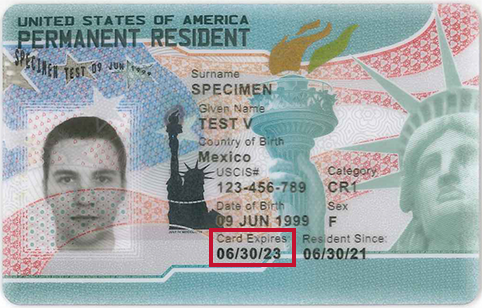
I-751 Approved After Divorce, Without a USCIS Interview
Our client was divorced and needed to remove the conditions on permanent residence without filing jointly with the former spouse. The I-751 petition sought a waiver of the joint filing requirement on three grounds: a good-faith marriage that ended in divorce, spousal abuse, and extreme hardship.
The case remained pending for two years and eleven months and included a request for additional evidence. USCIS ultimately approved the petition without requiring an interview.
The result allowed our client to complete the removal-of-conditions process despite the end of the marriage. The processing time and interview decision reflect this individual case and do not predict what will happen in another petition.
Read our original case update. Learn more about our representation in I-751 petitions and waivers.
Item #2
Item #3
WAIVERS

Adjustment of Status Approved with I-601 and I-212 Waivers After Prior Removal and Fraud Finding
Background
A U.S. citizen petitioned for his spouse, who had a highly complex immigration history spanning more than two decades. In the late 1990s, the beneficiary was removed from the United States after attempting to enter with a fraudulent permanent resident card. Years later, she lawfully reentered the United States on a nonimmigrant visa and subsequently sought adjustment of status through a prior marriage.
That application was placed on hold, and she was instructed to seek a waiver. An I-601 waiver was filed by prior counsel but was denied in 2006 for failure to demonstrate extreme hardship to a qualifying relative. The beneficiary lived with the consequences of that denial for many years and did not pursue further relief. Her prior spouse later passed away.
After marrying her current U.S. citizen spouse, the beneficiary remained hesitant to reapply due to her history and the prior denial. Years later, her family sought legal guidance on her behalf.
Legal Context
The beneficiary was inadmissible based on prior immigration fraud or willful misrepresentation under INA § 212(a)(6)(C)(i) and prior removal, requiring consent to reapply for admission under INA § 212(a)(9)(A).
Relief was available only through the discretionary approval of:
Form I-601, Application for Waiver of Inadmissibility, based on extreme hardship to a U.S. citizen spouse under INA § 212(i); and
Form I-212, Application for Permission to Reapply for Admission After Deportation or Removal, under INA § 212(a)(9)(A)(iii).
Both waivers required a detailed, individualized showing of equities, rehabilitation, credibility, and hardship, evaluated under the totality of the circumstances.
Process
We conducted a comprehensive review of the beneficiary’s entire immigration history, including the prior fraud finding, removal, lawful reentry, and the denied waiver from 2006. A new adjustment strategy was developed based on a different qualifying relative, materially different equities, and a substantially expanded evidentiary record.
Both the I-601 and I-212 waivers were prepared with extensive supporting documentation addressing hardship, family unity, length of residence, rehabilitation, and credibility. Given the beneficiary’s emotional difficulty discussing past events, we conducted multiple interview preparation sessions to ensure she could testify clearly, accurately, and consistently.
The beneficiary appeared for her USCIS interview and was able to address her prior conduct candidly and coherently within the legal framework presented.
Outcome
USCIS approved the Form I-601 waiver, the Form I-212 application, and the adjustment of status application. The beneficiary was granted lawful permanent resident status.
Important Reminder
Waiver applications are discretionary and depend on a detailed analysis of statutory eligibility, hardship, credibility, and equities. Prior denials do not preclude future relief, but outcomes are highly fact-specific and do not predict results in other cases.
I-601 Waiver Approved After Prior Marriage-Based Visa Refusal
Summary:
Parents sought legal assistance to reunite with their adult son abroad after many years of separation. The beneficiary had been refused an immigrant visa at the U.S. consulate based on a prior marriage-based visa application and was instructed to file a waiver of inadmissibility. The case required establishing extreme hardship to qualifying relatives in the United States.
Background:
The parents had immigrated to the United States years earlier, while their oldest son remained abroad. After a prolonged wait, the family-based immigrant petition for the son reached the immigrant visa stage. At the consular interview, the visa was refused, and the beneficiary was found inadmissible based on a prior spousal visa application that had not resulted in immigration. The consulate directed the beneficiary to seek a waiver of inadmissibility.
As a result, the beneficiary could immigrate only if extreme hardship to qualifying relatives—his U.S. citizen father and lawful permanent resident mother—could be demonstrated.
Legal Strategy:
A Form I-601 waiver was filed with USCIS based on extreme hardship to both parents. The waiver package addressed:
Long-term family separation spanning more than a decade
The parents’ age, health conditions, and reliance on family support
Emotional and psychological hardship resulting from prolonged separation from their son
Family structure in the United States, including the fact that the beneficiary was the only child remaining abroad
The cumulative impact of continued separation on the qualifying relatives
The case required careful coordination due to language barriers and the parents’ limited ability to articulate hardship in written form without assistance.
Request for Evidence:
Approximately two years after filing, USCIS issued a Request for Evidence (RFE), seeking additional clarification and support regarding the claimed extreme hardship. The response included a revised and expanded hardship narrative, additional supporting documentation, and further explanation addressing the specific concerns raised by USCIS.
Outcome:
USCIS approved the Form I-601 waiver of inadmissibility. Following the approval, the beneficiary was able to complete immigrant visa processing and enter the United States.
After more than sixteen years of separation, the son was reunited with his parents and siblings in the United States.
Item #3
Other immigration matters

Adjustment of Status for Surviving Spouse Under INA § 204(l)
Background
The client had resided in the United States for more than twenty years without lawful status following multiple unsuccessful attempts to resolve her immigration situation. Prior filings resulted in USCIS denials and adverse procedural consequences, including an arrest at a prior USCIS interview and placement in removal proceedings. Although the removal proceedings were later terminated, the immigration record remained complex.
After the death of her U.S. citizen spouse, no further filings were pursued for several years, and the client continued to reside in the United States without lawful status.
Legal Context
Under INA § 204(l), certain family-based immigration petitions and related applications may remain eligible for approval notwithstanding the death of the qualifying relative, including a U.S. citizen spouse, provided the beneficiary was residing in the United States at the time of the petitioner’s death and continues to reside in the United States. See INA § 204(l), 8 U.S.C. § 1154(l).
When applicable, INA § 204(l) permits USCIS to adjudicate a marriage-based immigrant petition and a related application for adjustment of status despite the death of the petitioning spouse. As an immediate relative, the surviving spouse may seek adjustment of status under INA § 245(a), and certain adjustment bars applicable to other applicants do not apply. See INA §§ 201(b)(2)(A)(i), 245(a), (c); 8 C.F.R. §§ 204.2(i), 245.1(b), (c).
Eligibility under INA § 204(l) depends on a careful review of residence requirements, procedural history, and admissibility.
Process
We conducted a comprehensive review of the client’s immigration history, including prior filings, removal proceedings, and documentary evidence. Based on that review, we identified eligibility under INA § 204(l) and developed a strategy to proceed under the immediate-relative adjustment framework while addressing prior procedural complications.
A properly supported application for adjustment of status was prepared and submitted in accordance with the governing statutory and regulatory provisions.
Outcome
The client appeared for a USCIS interview in May 2025. Following additional review, the application for adjustment of status was approved in September 2025.
Important Reminder
Immigration cases are highly fact-specific and governed by detailed statutory and regulatory requirements. Prior outcomes do not predict or guarantee results in other cases.
Reopening and Adjustment of Status for K-1 Entrant After Denial for Alleged Abandonment
Background
The client entered the United States on a K-1 fiancé(e) visa, married the U.S. citizen petitioner within the required 90-day period, and timely filed an application for adjustment of status based on that marriage.
The relationship subsequently became abusive. At the scheduled adjustment interview, the U.S. citizen spouse did not appear. As a result, USCIS denied the Form I-485 on the ground that the application was abandoned due to the petitioner’s failure to attend the interview.
The client later sought legal counsel following the denial.
Legal Context
Under the Immigration and Nationality Act, a K-1 visa entrant who marries the petitioning U.S. citizen within 90 days may apply for adjustment of status based on that marriage. See INA § 245(a); 8 C.F.R. § 245.1.
In the jurisdiction of the Ninth Circuit, binding case law clarifies that a K-1 beneficiary’s eligibility for adjustment of status is not conditioned on the continued participation of the U.S. citizen spouse at the time of adjudication, provided the marriage was entered into in good faith. In Choin v. Mukasey, 537 F.3d 1116 (9th Cir. 2008), the court held that the statute imposes no duration-of-marriage requirement and that the central inquiry is whether the marriage was bona fide.
Accordingly, the absence of the U.S. citizen spouse at an adjustment interview does not, by itself, render the application abandoned or legally deficient where the applicant otherwise remains eligible to adjust status based on a good-faith marriage.
Process
We reviewed the denial decision, the procedural history of the adjustment application, and the governing statutory and Ninth Circuit authority. Based on that review, we prepared a detailed request asking USCIS to reopen the adjustment application on its own motion, demonstrating that the stated basis for denial was inconsistent with controlling law.
The request was supported by documentary evidence of the bona fide marriage, the client’s K-1 admission and timely marriage, and relevant legal authority governing adjustment of status for K-1 entrants in the Ninth Circuit.
Outcome
USCIS reopened the adjustment application and scheduled the matter for further adjudication. The client was given the opportunity to proceed with her adjustment of status application based on the governing legal framework. Her application was approved in August 2021.
Important Reminder
Immigration cases are highly fact-specific and depend on jurisdiction, procedural posture, and applicable law. Prior outcomes do not predict or guarantee results in other cases.
Widow Self-Petition and Adjustment of Status Approved
Background
The client had resided in the United States for many years but was unable to pursue adjustment of status because she could not establish lawful admission. Her only evidence of entry—a border crossing card—was believed to have been lost decades earlier. She had no passport, no Form I-94, and no admission stamp.
Prior counsel pursued multiple FOIA requests and a replacement I-94 without success. As a result, no filing was made, and the client remained without lawful status.
During this period, the client’s U.S. citizen spouse passed away. Following the death of her spouse, no further immigration filings were pursued for several years, and the client believed that any possibility of legalization had been foreclosed.
Legal Context
Under INA § 204(l), certain family-based petitions and related applications may remain eligible for adjudication notwithstanding the death of the qualifying relative, including a U.S. citizen spouse, provided the beneficiary was residing in the United States at the time of the petitioner’s death and continues to reside in the United States. See INA § 204(l), 8 U.S.C. § 1154(l).
When applicable, INA § 204(l) permits USCIS to adjudicate a widow self-petition and a related application for adjustment of status despite the death of the petitioning spouse. As an immediate relative, a surviving spouse may seek adjustment of status under INA § 245(a), and certain adjustment bars applicable to other applicants do not apply. See INA §§ 201(b)(2)(A)(i), 245(a), (c); 8 C.F.R. §§ 204.2(i), 245.1(b), (c).
Eligibility in such cases depends on a careful, fact-specific analysis, including proof of lawful admission, satisfaction of residence requirements, and admissibility.
Process
We conducted a detailed review of the client’s immigration history and revisited the circumstances surrounding her entry into the United States. Through careful and repeated questioning, it became clear that the border crossing card was not definitively lost. The client explained that the document had been left with an acquaintance approximately twenty-five years earlier—someone with whom she had not remained in contact and whom she believed had “probably” discarded the documents.
Rather than accepting that assumption, we encouraged the client to contact the individual directly, notwithstanding the understandable discomfort and awkwardness involved in reaching out after so many years. In parallel, additional FOIA requests, including with the Department of State, were prepared to preserve all available options.
The client ultimately made the contact. The acquaintance still had possession of the original border crossing card, which was promptly retrieved and provided as documentary proof of lawful admission.
With lawful entry established, a widow self-petition and application for adjustment of status were prepared and filed on November 19, 2024, in accordance with the applicable statutory and regulatory framework.
Outcome
The application for adjustment of status was approved on September 15, 2025, and the client was granted lawful permanent resident status.
Important Reminder
Immigration cases are highly fact-specific and governed by complex statutory and regulatory requirements. Prior outcomes do not predict or guarantee results in other cases.
